

The Surprising Similarities Between European Soccer and College Football
College football is the definition of chaos—and the only sport that matches it is played across the Atlantic


It’s that time of the year when college football enters its favorite state: chaos. Coaches leave for new jobs, conference automatic bids for the playoff are decided, and debates about who deserves a chance to play for a national championship are had. It’s a messy time in a sport that thrives on said messiness. When compared to other sports in America, it truly has no equal in that regard.
But the sport that does seem to share a lot of DNA with one of the US—European soccer. Between the turnover of coaches, veracity of the fan bases, and the structure of its postseason, college football is the closest thing we have in America to European soccer.
Passionate Fan Bases
If you attend a soccer match in Europe, you will see a section of supporters called the “Ultras”. They are a group of super fans, key to driving stadium atmosphere with screams, chants, and songs. They are what make watching a Premier League game such a captivating experience. There is no direct equivalent of Ultras in American sports—but student sections in college football stadiums are likely the closest thing.
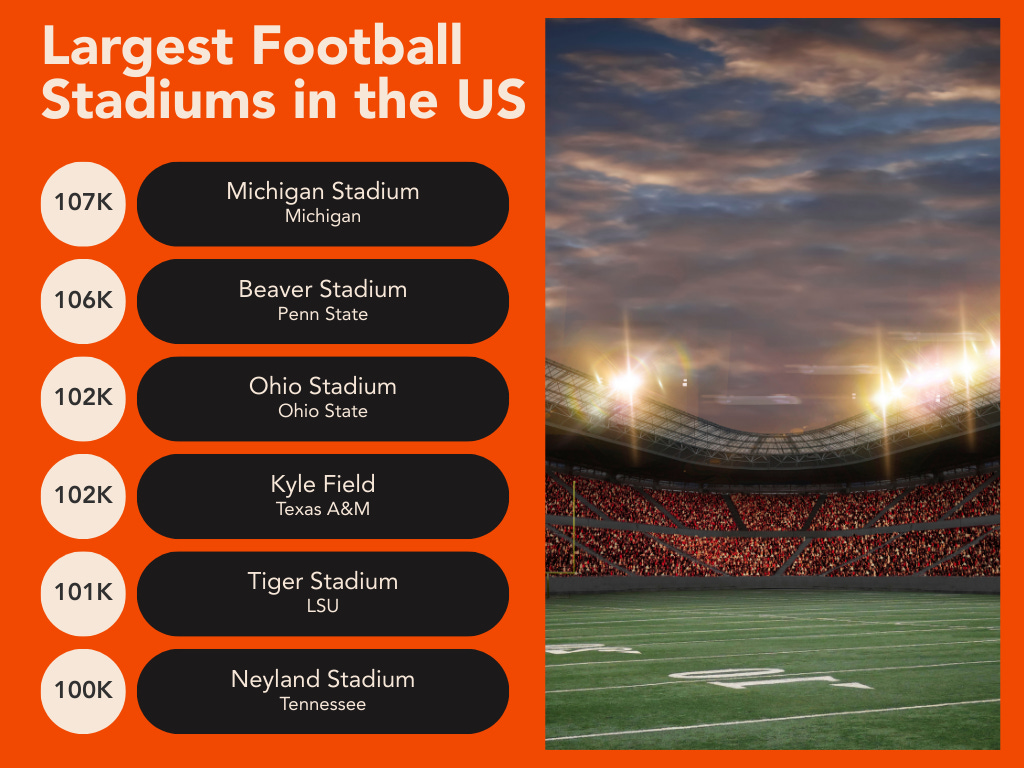
Virginia Tech’s “Enter Sandman” entrance, Florida’s unified Gator Chomp, Texas A&M’s 12th Man, and the raw noise of Death Valley for LSU home games are proof of these similarities. The 14 largest football stadiums in America are all college venues, and those teams fill those stadiums regularly during Saturdays in the fall.
Much like their European soccer counterparts, fans are often born into fandom, and loyalty runs through generations, defined by community. When I lived in Detroit, there was a clear delineation between families that were Michigan and Michigan State families. A friend of mine once had a moment of anxiety because his daughter was deciding between the two schools for her education, and he was relieved when she chose Michigan—an indication of how deep those loyalties are.
It’s incredibly common in American professional sports for team owners to get fed up with their current stadium deal and then relocate the team to a new city. This is usually a windfall for wealthy owners but leaves fan bases reeling without a team. Since 2000, there have been 16 relocations from the major American sports leagues, with cities like Oakland and San Diego wondering when their teams might return.
That takes away from the community impact that a team can foster, which goes against the ethos of European soccer (although there have been a few exceptions over the years). College football, similarly, has that same community feel—a whole college campus isn’t going to move because of needing a new football stadium after all. As a result, these schools become embedded into the culture of their cities, a part of the identity of the region. Being born in Louisiana for example, typically means that watching LSU football is a way of life, a rite of passage.
Moreover, it can also be argued that the passion that borders on delusion that we see in soccer can only truly be matched by college football fans. Wins in the college football season come at a premium in a way no other American sport matches. An NFL team can conceivably go 10-7 in a season and still make the playoffs with a chance to play for a title. In college football, a team that goes 8-4 or 7-5 might fire its coach for simply not being good enough. The expectations are sky high, and it is reminiscent, at the highest level, of how a Chelsea, Bayern Munich, or Barcelona fan may view their team’s success.
There is a lifelong commitment from fans in both sports that make them so appealing and their atmospheres so intense. Players that are developed become local legends, living in the memories of fans for generations in mythological ways that is simply not the same in American pro sports. The passion creates pressure, which leads to another similarity: the incredibly short life span of coaches.
What Have You Done for Me Lately?
I have often mused that the best job in the world to have is that of a fired college football coach. The job entails being underwhelming or mediocre for a few years until you are fired and then paid a handsome buyout to not coach the team. This year set a new record for buyouts with more than $228 million being paid to fired coaches. Here are just some of the buyouts that we have seen this college football season:
Brian Kelly (LSU): $54 million
Mark Stoops (Kentucky): $38 million
Jonathan Smith (Michigan State): $33.5 million
Billy Napier (Florida): $21 million
Hugh Freeze (Auburn): $15.8 million
Mike Gundy (Oklahoma State): $15 million
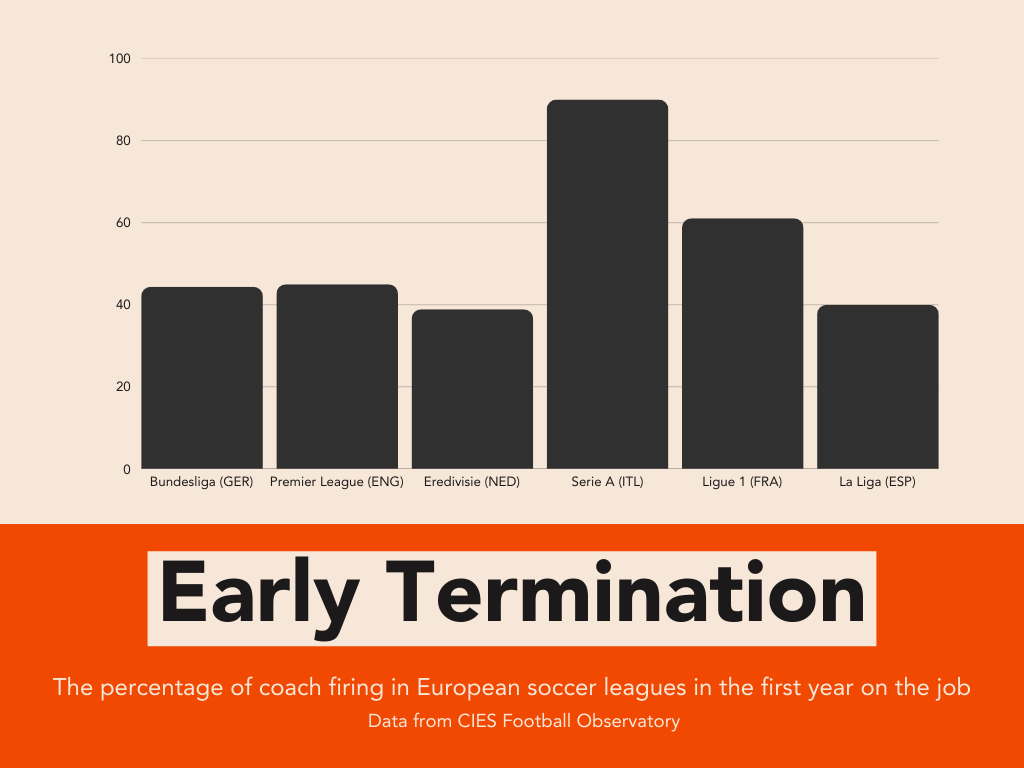
In European soccer the pressure is equally high, and coaches are often the first to go. In the English Premier League, 45% of coaches don’t last a full season, with an additional 20% being fired in under two seasons. The Spanish La Liga and German Bundesliga have similar rates of firing in the first season at 40% and 44.4%, respectively. It’s even worse in France and Italy. 90% of Italian Serie A coaches and 61.1% of French Ligue 1 coaches are fired within their first year.
While an NBA or NFL coach may get a couple of seasons to get things right and build a foundation, that is not the case in big time college football and in European soccer. There are exceptions to the rule, such as Kirk Ferentz at Iowa (27 years) and Pep Guardiola at Manchester City (9 years), but by and large it is a “what have you done for me lately” sort of job.
For all the community and collective emotional tissue that both foster, they have become posterchildren for the commercialization and loss of identity of sports. Soccer has been filled with oil money and foreign ownership, while college football is dominated by NIL collectives and the looming prospect of private equity. Fans are still incredibly passionate, but they are also being slowly priced out of many experiences with their favorite clubs. This capitalism model is no more evident than in the way the competition has been laid out over the last decade in both sports.
Sports of Two Seasons
In the NFL and NBA, the goal of a season is singular: to make the playoffs and compete for a championship. Depending on the type of team you are in college football, there are sometimes two parallel goals: win your conference or compete for a title in the playoffs. Top level teams are sometimes willing to sacrifice the goal of winning their conference if it means a chance to make the playoff. For example, Alabama and Texas A&M are not playing for the SEC title this year, but because they are well positioned to make the playoff their seasons are not deemed failures.
There are other programs where the goal of the season is to win the conference first and foremost—this is especially common in the Group of 6 conferences. In a sense, this is a similar dynamic to the way that topflight European soccer clubs view winning their domestic league versus success in European competition like the Champions League. A team like Arsenal might be okay finishing third in the Premier League if they had a real chance to win the Champions League for instance.
Teams that exist below the threshold of perennial national title contenders are typically focused on competing in their conferences, developing young talent, and getting revenue boosts from bowl games. This is similar to mid-table European clubs that develop talent and profit from it through transfer deals. Occasionally these teams compete with the juggernauts at the top of the league, and despite a lack of championship hardware consider the campaign to be tremendously successful.
With these two goals in mind, there is a different feel to a team like Georgia or Oregon to teams like Iowa or NC State. While the former is focused on boosting their NIL spending and championship positioning, the latter feels a little more focused on development and maintaining the old measure of success of college football (conference titles and bowl games).
It is the same as the difference between a team like Paris Saint-Germain (PSG) and Stade Rennais in the French Ligue 1. PSG is an international brand that views winning their domestic league as an afterthought. For them, winning the Champions League is the ultimate goal. For Stade Rennais, merely making the Champions League would be a tremendous achievement, but the main priority is finishing in the top half of the league. They are teams that are playing the same sport, in the same league, but their priorities are miles apart.
This is the part of college football that makes it endlessly fascinating. Class division and an illusion of possibility exist in today’s landscape thanks to the influx of NIL and transfer portal. We have seen it from Texas Tech this year, a perennially mediocre program that finds itself on the cusp of a playoff appearance. Is this any different than a soccer club that receives a cash injection from new ownership and suddenly vaults itself into relevance? It happened with Manchester City and PSG and is currently happening with Newcastle United.
European soccer is so popular because of the ubiquity of the sport, the passion of its supporters, the quality of the athletes, and the history of its clubs. When distilled to a strictly American lens, this is the same formula as college football. Brands like Alabama, Michigan, Ohio State, and Texas are household names. The sport of football has never been more popular than it is today thanks to the proliferation of the NFL. And college football offers enough chaos to keep us interested at all times. The similarities between the two entities is uncanny.